
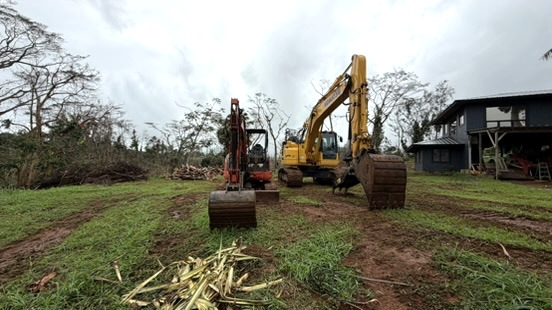
These marks are planning aids. They do not establish a legal property boundary, utility clearance, permit approval, price, or safe entry into a hazardous area.
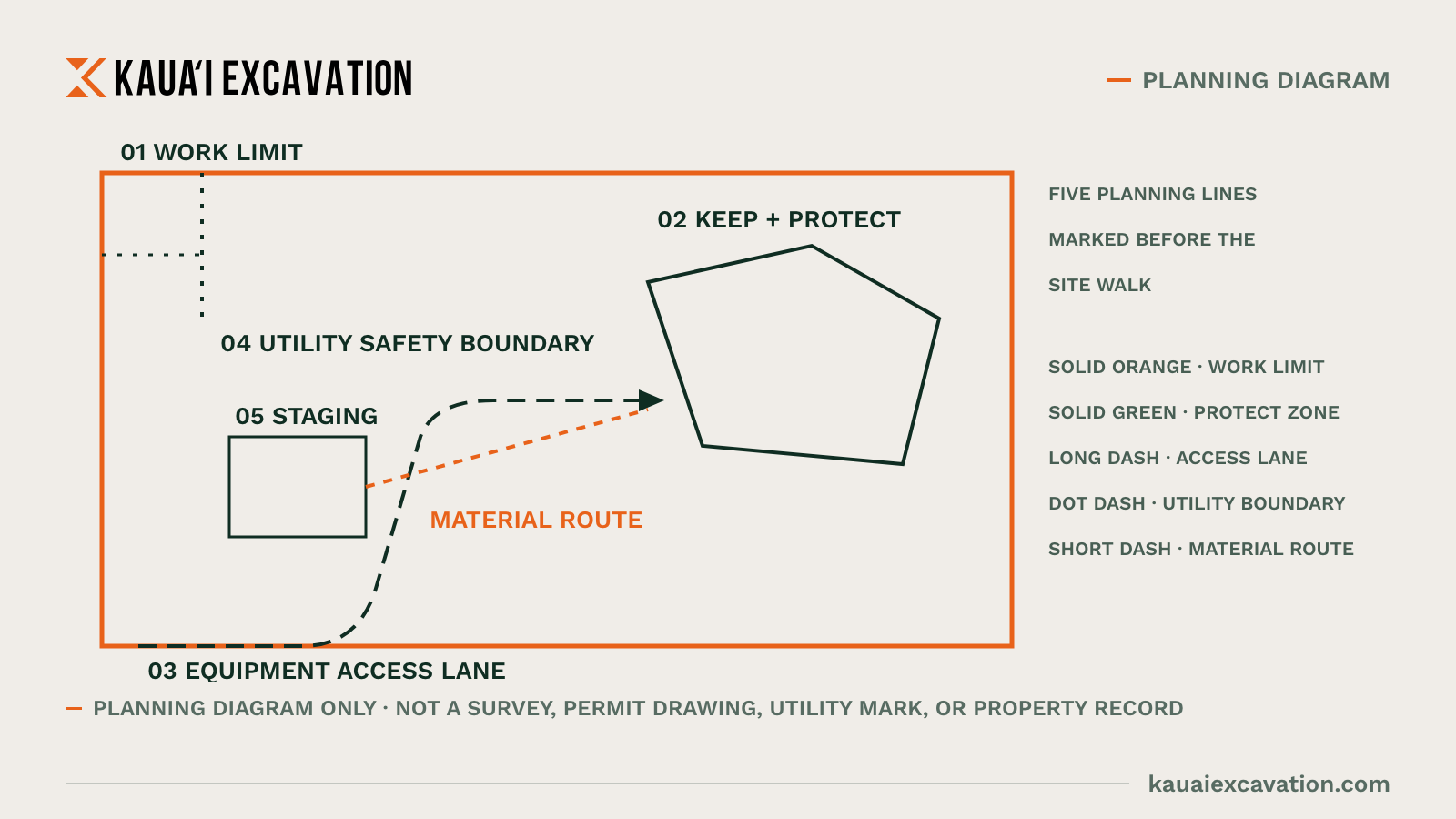
Line 1: The Work Limit
Mark where the requested clearing should start and stop. A visible work limit helps separate the proposed work area from neighboring land, structures, roads, fences, drainage features, and untouched vegetation.
If the boundary is uncertain, do not guess. Use reliable property records and the appropriate field professional before treating any marker as a legal boundary.
Line 2: The Keep and Protect Zone
Mark the trees, planted areas, rock walls, structures, drainage features, utilities, and other site elements that must remain undisturbed.
The protection line should be clear enough to discuss from a safe position during the site walk. It should not require entering the fall zone of a damaged tree or crossing a utility hazard.
Line 3: The Equipment Access Lane
Trace the intended route from the entry point to the work area. Include the gate, turns, shoulders, overhead constraints, soft ground, slopes, and any place where machines may need to reposition.
Access is part of the scope. A clearing plan that ignores the route in can create a gap between the requested result and the way the work can actually be performed.
Line 4: The Utility Safety Boundary
Identify visible overhead lines, poles, transformers, meters, marked underground utilities, and other utility features from a safe distance.
KIUC says to call 811 five working days before digging and to keep equipment 30 feet from power lines. If a downed line is present, KIUC says to stay at least 30 feet away and call 911. Do not place a marker inside a utility hazard area.
Line 5: The Material Route and Staging Area
Mark where cut vegetation, logs, chips, soil, rock, or other material may move, stage, remain, or leave the property. Include the route between the work area and the staging point.
This line helps expose decisions that affect the site walk: what stays on site, what needs processing, what may require hauling, and what finished condition the owner expects.
Walk the Five Lines Before the Site Visit
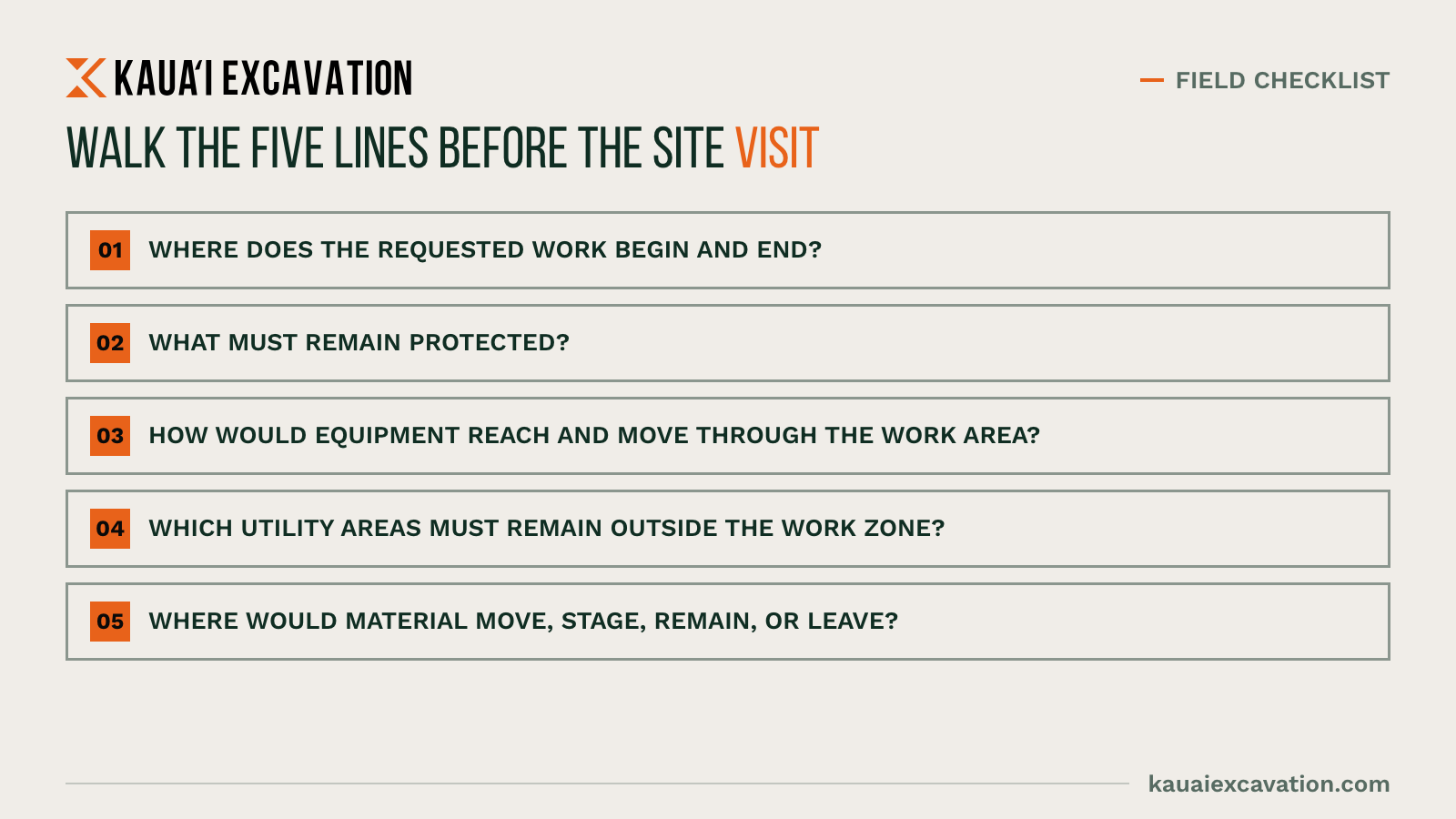
Use the marks to answer five questions:
- 1.Where does the requested work begin and end?
- 2.What must remain protected?
- 3.How would equipment reach and move through the work area?
- 4.Which utility areas must remain outside the work zone?
- 5.Where would material move, stage, remain, or leave?
Then photograph the marked areas from safe positions and keep private property details for the secure estimate process. Do not post an address, TMK, phone number, or private site detail in a public comment.
Permit and Planning Boundary
The County of Kauaʻi provides separate paths for grading, grubbing, stockpiling, and land-use review. The applicable review depends on the actual scope and site. A field marker does not decide that requirement.
Frequently Asked Questions
Do these markers establish my property line?
No. Use reliable property records and the appropriate field professional when the legal boundary is uncertain.
Can the job be priced from the marked lines and photographs?
No. The marks and photographs improve the first scope conversation. Access, slope, vegetation, utilities, material handling, permit questions, and the finished condition may still require an on-site review before a written proposal.
Should I mark an area near a downed line?
No. Follow the current utility and emergency route. KIUC says to stay at least 30 feet from a downed line and call 911.
Does marking the work area replace 811?
No. KIUC says to call 811 five working days before digging. The five-line plan is a site-walk aid, not utility clearance.
What if I cannot safely reach one of the lines?
Do not enter the area. Describe the constraint in the secure estimate request and review it from a safe position during the site walk.
Request a Property Review
and identify the work limit, protection zone, access lane, utility boundary, and material route you want reviewed.