
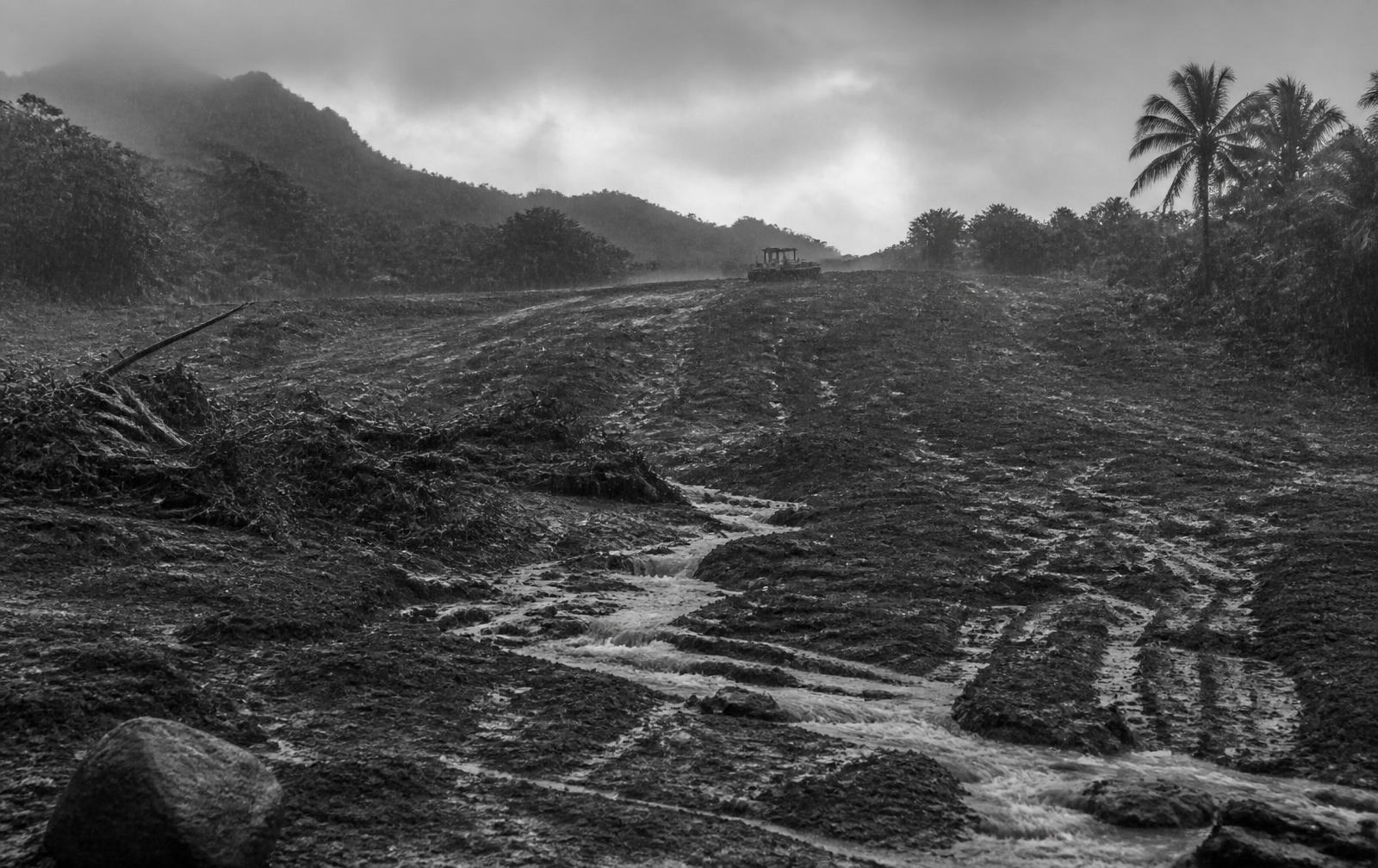
Rain changes access before it changes production
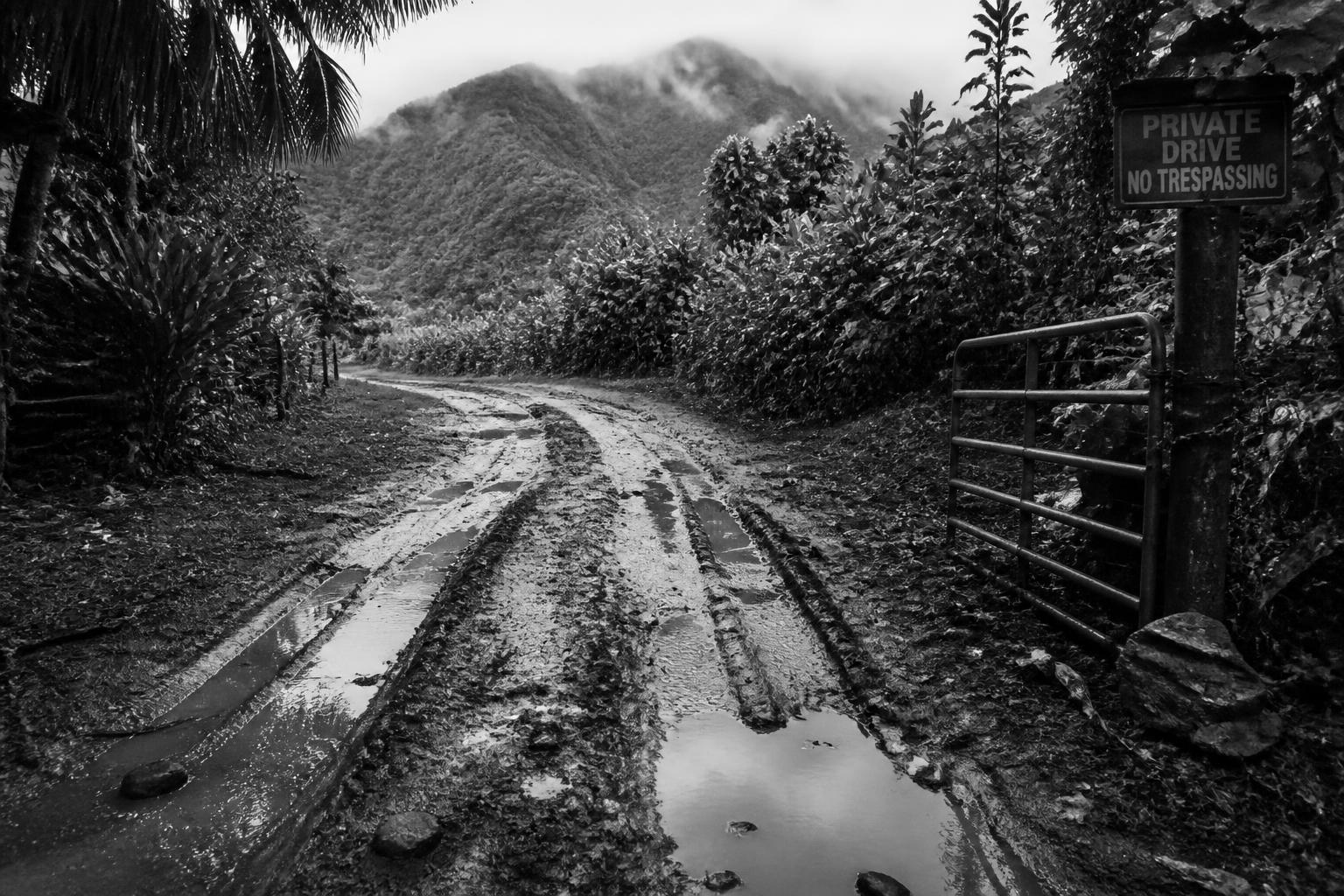
A driveway may look wide enough while still having a soft shoulder, steep section, tight turn, low branch, or drainage crossing that becomes more limiting after rain.
Before requesting an estimate, document:
- the road and driveway approach
- the narrowest gate or turn
- steep or rutted sections
- low areas where water collects
- visible culverts, swales, and drainage crossings
- possible equipment staging and loading areas
Photos should show the full route from the road to the proposed work area. Close views of vegetation do not show whether equipment can reach it.
Saturated ground can change the sequence
The National Weather Service reported that already saturated ground contributed to faster runoff and flooding during Hawaiʻi's March 2026 wet period. Its April 2026 summary also recorded heavy rain, road closures, flooding, and land or rock slides affecting Kauaʻi.
Those events do not predict conditions on a specific parcel. They do show why recent rain and current ground conditions belong in the planning conversation.
A wet site may require the project team to reconsider:
- which access route is practical
- whether material can be loaded or staged safely
- where tracked equipment can operate without unnecessary disturbance
- whether clearing should be divided into smaller areas
- when exposed soil protection and restoration should occur
The answer depends on the property, proposed scope, and applicable professional or agency review.
Clearing can affect drainage beyond the work area
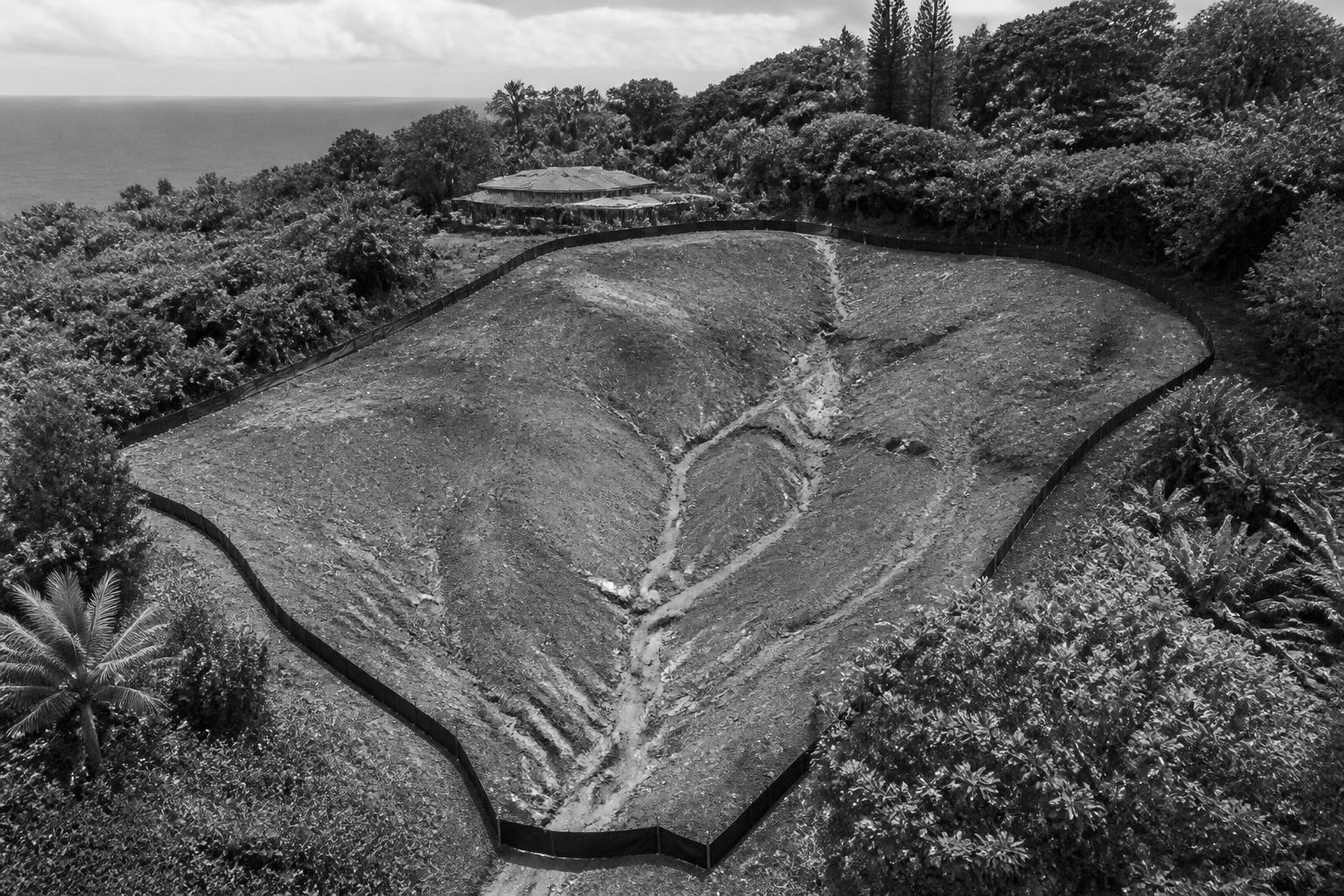
Vegetation, roots, soil surface, slopes, ditches, and swales all influence how water moves. Removing vegetation or changing ground elevations can redirect runoff toward a driveway, neighboring property, structure, or low area.
Kauaʻi County states that its grading, grubbing, and stockpiling standards are intended to control soil erosion and sedimentation. The County also identifies drainage-pattern changes as one condition that can trigger permit requirements.
That does not mean every clearing project requires the same permit. It means owners should not assume that vegetation removal and earth movement are interchangeable or unregulated.
Before work is priced, identify:
- whether roots will be removed or vegetation only cut back
- whether soil will be excavated, filled, graded, or stockpiled
- whether existing drainage patterns may change
- whether the work area approaches County thresholds
- whether another professional must prepare or review plans
Kauaʻi County Public Works is the authority for current grading, grubbing, and stockpiling requirements.
Staging needs a wet-weather answer
Cleared vegetation and other material need a destination. A staging area that works in dry conditions may hold water, become difficult to load from, or interfere with runoff after rain.
A useful site plan identifies:
- where vegetation or material may be staged
- how trucks or equipment reach that area
- whether the route crosses soft ground or a drainage path
- what must remain accessible during the work
- what the finished area should be ready for
The material plan should be part of the scope, not an afterthought.
What to send before a site walk
Prepare a short property packet:
- Property address and tax map key.
- Wide photos of the work area.
- Photos of the full access route.
- Photos taken after recent rain, if safely available.
- Visible drainage paths, culverts, swales, slopes, and low areas.
- The intended finished use.
- Known boundaries, easements, utilities, or access restrictions.
- Any existing plans or agency correspondence.
Do not send gate codes or other private access information through a public form. Kauaʻi Excavation can request additional views privately during follow-up.
The planning rule
Dry-day photos show vegetation. A useful land-clearing plan also shows access, water movement, staging, and the intended finished condition.
Rain may change the order of work, the practical access route, or the controls needed around disturbed ground. Identifying those conditions early produces a clearer estimate conversation and reduces avoidable scope changes later.
Common questions
Does rain always stop land-clearing work
No. The effect depends on access, soil and slope conditions, drainage, the proposed work, and current site conditions. Rain can change sequencing even when it does not stop the entire project.
Why photograph the property after rain
After-rain photos can reveal ponding, runoff paths, soft access areas, and drainage behavior that may not be visible in dry conditions. Photos do not replace a site review.
Does every clearing project need a County permit
Not every project follows the same permit path. Kauaʻi County publishes thresholds and conditions for grading, grubbing, and stockpiling. Confirm the current requirements for the actual scope with County Public Works.
What is the most useful first photo
Start with a wide photo showing the work area in context, then show the complete route from the public road to that area.
Official sources to check
- Kauaʻi County grading, grubbing, and stockpiling guidance
- Kauaʻi County applications and sediment-control resources
- National Weather Service March 2026 rainfall summary
- National Weather Service April 2026 heavy-rain summary
For more vetted links, see our resources page.