
The reef, the aquifer,
and the deadline.
Cesspools were never designed to treat sewage, they store and seep it. On Kauaʻi, that seepage feeds streams, reefs, and drinking-water aquifers. Act 125 sets the legal end-date; the environment sets the moral one.
~53M gallons / day
Untreated sewage that Hawaiʻi cesspools statewide release into the ground every day.
13,700 cesspools
Estimated Kauaʻi cesspools identified through Hawaiʻi DOH-linked reporting, many in priority watersheds and coastal zones.
2050 hard stop
Act 125 mandates conversion of every cesspool in the state. Priority zones are sooner.
Cesspool vs septic, in one picture.
A cesspool is a hole. A septic system is a treatment train. That difference is what Act 125 is asking every Kauaʻi property to close.
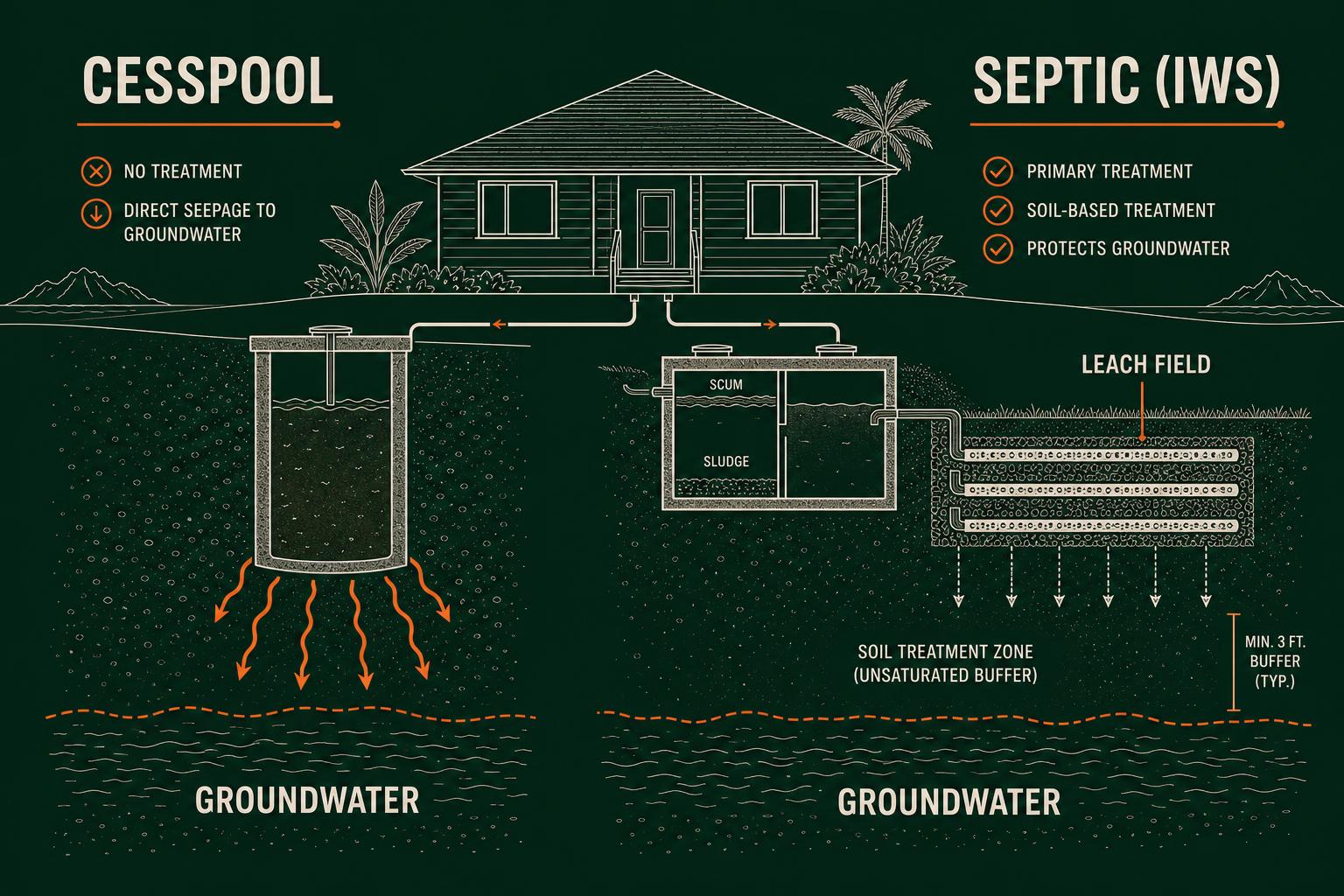
A hole in the ground. No treatment, no buffer, raw sewage seeps directly toward the groundwater below.
Two-chamber tank plus a soil-based leach field. DOH requires at least a 3-foot unsaturated buffer before effluent can reach groundwater.
Where the environment is most at risk.
Hawaiʻi state law requires every cesspool to be upgraded, converted, or connected to a sewer by January 1, 2050. Some properties may need to act earlier based on system failure, pumping or spill history, permit activity, building or use changes, or specific discharge conditions. The DOH Cesspool Prioritization map and your parcel-specific factors determine your real timeline, we'll help you read both.
- Coastal exposure bandWhere projected sea-level rise and a rising water table put cesspools at highest risk of breakthrough.
- Inland, still on the clockEvery remaining parcel is required to convert by the 2050 Act 125 backstop.
- Shallow · < 10 ftCoastal, highest risk of cesspool breakthrough.
- Moderate · 10-40 ftTransitional lowlands, soil buffer varies.
- Deep · > 40 ftInterior, deeper water table, longer buffer.
Hanalei Bay & North Shore
Coastal proximity, streams, and high water table, among the most environmentally sensitive parcels on the island.
Wailua & East Side near streams
Drinking-water source areas and stream corridors, DOH flags many of these parcels for earlier action.
Poʻipū / Kōloa coastal
South Shore reef proximity and high water table, known sensitivity area.
Waimea & West Side
Aquifer-recharge sensitivity in lower watersheds, review on a parcel-by-parcel basis.
Sooner is always cheaper.
As the 2050 statewide deadline approaches, demand for engineers, permits, and installers will spike. Material costs trend up. Financing programs are likely to tighten as the queue fills. The owners who start now will pay less and have far more control over their schedule.
READY TO GET STARTED?
We coordinate the permit steps with the right professionals, do the excavation and install, and help schedule inspections, so you can get back to your weekend.